How to Get on a Podcast as a Guest Without an Agent
Summary
To get on a podcast as a guest, build a shortlist of 20 shows that already book founders like you, then send each host a pitch under 200 words that references a specific episode and offers one clear angle. Follow up once after five to seven days. In the best public dataset we found, 1,000 pitches produced a 24.3% reply rate and 100 bookings. Prepare one story, not a bio.
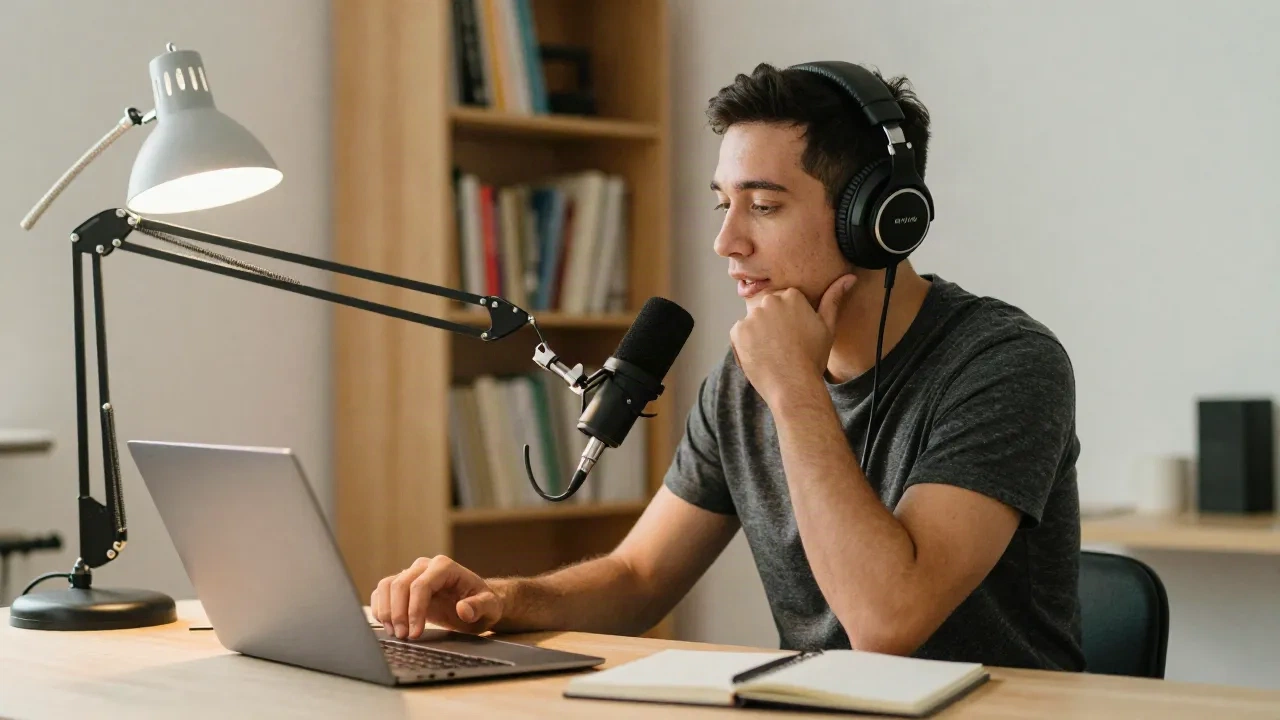
A podcast agency will quote you $500 to several thousand dollars a month to do what this page walks you through in about three hours. Here is how to get on a podcast as a guest: pick 20 shows you can realistically land, send each host a pitch under 200 words that names a specific episode, follow up once, and show up with one story they can build an episode around. The best public dataset we found: 1,000 pitches, a 24.3% reply rate, 100 bookings.
Why founders keep failing at this (and it is not the pitch)
Most founders start at the wrong end. They open a list of the top 50 business podcasts, pick the ones they listen to on their commute, and fire off the same paragraph to all of them. Then they conclude that podcasts "don't work."
Hosts get these emails daily. Dave Rupert, who hosts a long-running web development podcast, wrote that his main filter is simple: the guest should already be talking about something. He ignores job titles, funding and follower counts. What he wants is "as close to a sure thing as possible", someone who can fill an hour without him rescuing the conversation.
That changes your job. You are not selling yourself. You are removing risk for a person who has an episode slot to fill.
Skip the aspirational shows for now. A 400-listener show with a host who replies in 48 hours beats a top-10 show that never opens your email.
Pick 20 shows, not 200
Volume is the lazy answer. A shortlist is the better one, and building it takes one afternoon.

Start from the other direction: look at who has already been a guest on shows in your space. Search your three closest competitors and two founders you respect, then list every podcast they appeared on. Those hosts have already proven they book people like you.
Then sort the list into three tiers:
Reach shows (5 max): big audiences, slow replies, long odds. Pitch these last.
Fit shows (10): 1,000 to 20,000 listeners per episode, a clear niche match with your buyer, and a host who has interviewed a founder in the last 60 days.
Warm-up shows (5): small, friendly, quick to schedule. You will use these to get your first recordings done and your story sharper.
Check each show for the one thing that matters: is the host currently booking guests? Look at the last three episodes. If all three are solo episodes or the same co-host chat, move on. A show that has not had an outside guest in a quarter is not looking for you.
A word on tools. Matchmaking sites run roughly $15 to $70 a month, and databases start around $99, while booking agencies charge $500 to several thousand. For a first batch of 20 shows, you need none of them. A spreadsheet and a free podcast app will do. We would only pay for a database once you are past 40 or 50 bookable shows and your own search stops turning up new ones.
Build the tracker before you send anything. Put every show in one table. Columns that earn their place: show name, host, last guest, listener tier, the episode you will reference in your pitch, date sent, date followed up, status.
The "episode you will reference" column is the one most people skip, and it is the reason their pitches read like mass mail. If you cannot name an episode and say what you took from it, you have not listened enough to pitch yet.
Give yourself a cap of 15 minutes of research per show. Listen to one full episode at 1.5x, skim two more, and write one sentence about what the host keeps returning to. That sentence goes in your first line.
What goes in the pitch (and what gets deleted)
Here is the data point we trust most. One team documented 1,000 podcast pitches over 13 months: a 97% delivery rate, a 61% open rate, a 24.3% reply rate (167 replies) and 100 bookings across 74 unique shows. That works out to a 10% booking rate per pitch, with about 270 follow-ups sent along the way. Their subject lines referenced episode numbers, and Friday afternoon sends did well.
Caveat: that is one campaign, run by one team, with targeting we cannot audit. Treat 10% as an upper-middle benchmark for a well-targeted founder list, not a promise. We do not have booking-rate numbers of our own on this topic yet.

A pitch that fits the pattern is short enough to read on a phone without scrolling. Four parts:
Subject line: specific and plain. "Guest idea after your episode on pricing a free tier" beats "Podcast collaboration opportunity."
First line: the one sentence from your research. Not praise, a reaction. "You said most seed founders price off a competitor's page. I did the opposite and it cost us three months."
Your angle: one story, one lesson, one number. Two sentences.
The ask: "Would this fit an upcoming episode?" Then your name, your company in five words, and one link to somewhere you have spoken or written before.
Here is a version you can copy and adjust:
Subject: Idea after your episode on dropping a free tier
Hi [Name], your episode with [Guest] stuck with me, especially the part about [specific thing]. We went through the same thing at [Company] and made the opposite call.
I could talk about what happened when we [one concrete decision] and the [number] it cost or earned us. No pitch for the product, just the decision and what we would redo.
Does that fit anything you have planned? Happy to send two or three question ideas. Here is a talk I gave on a related topic: [link]
[Name], [Company in five words]
Delete from your draft: your funding history, your product feature list, the word "synergy" and any sentence that starts with "I'd love to." Hosts do not need your story to be impressive. They need it to be useful to their listeners.
The angle matters more than the bio
Founders pitch themselves ("founder of X"). Hosts book topics.
Think of the angle as a headline for a 40-minute conversation. Three that tend to work for a B2B founder: a decision you reversed and why, a number you did not expect (churn, cost, reply rate), or a process you built because the standard advice failed. Notice what these share: they are specific, and they have a built-in tension.
Prepare two angles, not ten. Send the first. If the host replies "not quite right for us", you have the second ready, and the thread stays alive.
Do not offer to "talk about anything." Hosts read that as "has nothing to say."
Follow up once, on day 5, then stop
That campaign sent 270 follow-up emails on top of its 1,000 first pitches. Most founders send nothing after the first email because they feel they are being pushy. They are not. Hosts are mid-edit, mid-travel or mid-launch, and your email sank under 80 others.
Send one follow-up, five to seven days after the first. Keep it two lines, restate the angle in a new way and make replying easy:
Bumping this in case it got buried. The short version: [one-sentence angle]. A yes or no is fine, I will not chase again.
And then you really do not chase again. After that, wait 90 days and pitch a different angle to the same host if you still think you fit. Note the date in your tracker.
If you are using a matchmaking site as well, the logic holds: its dashboard may show you who is looking, but the host still decides based on the same signal, a clear angle and a sure-thing guest.
What to do after they say yes
A reply does not equal a recording. Treat the next 48 hours as part of the pitch.
Reply within a few hours, offer two or three time slots and ask three questions: how long is the episode, is it live or edited, and do they want you to prepare anything. Send your headshot, one-line bio and any link they ask for in the same email, so they never have to chase you for assets.
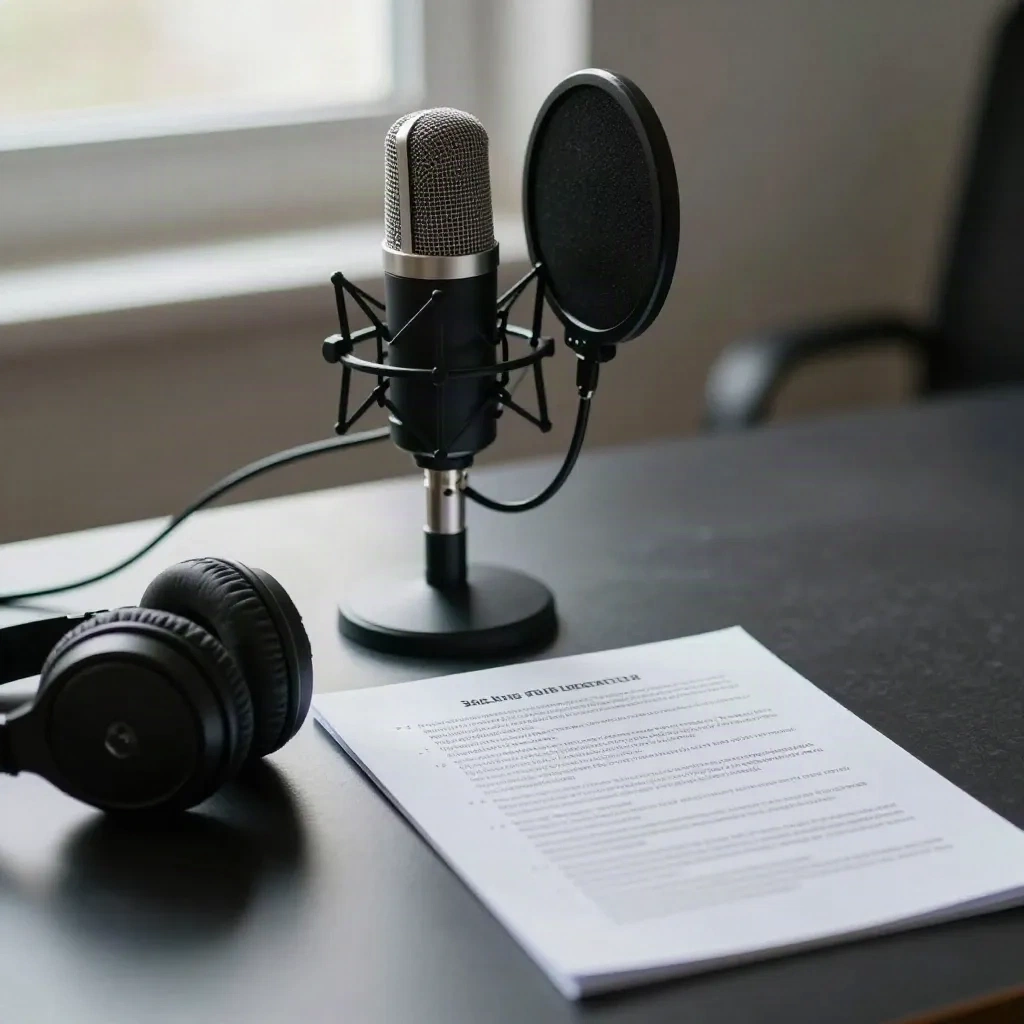
Prep a single page: your angle in one sentence, three stories with a number each, and one line you want the listener to remember. Not a script. Hosts can hear a script from the first answer.
On the day, treat audio quality as part of your credibility. Wired headphones, a quiet room, a decent USB mic and noise suppression turned on. A background noise canceller like Krisp costs little and rescues a recording made in a noisy apartment. Record a local backup if the host's platform supports it.
Make the episode work after it goes live
An episode is only an asset if you reuse it. Podcast consumption has a long tail: according to Rephonic's roundup, around 30% of the top 100 active podcasts' consumption comes from episodes more than eight weeks old, so the clip you share in month three can still find listeners.
Within a week of release, do four things:
Share the episode and tag the host, with one quote you actually said.
Cut a 60 to 90 second clip. A text-based editor makes this a ten-minute job, since you edit the transcript rather than the waveform.
Add the link to your email signature, your site's press page and every future pitch. It is your proof that you are a sure thing.
Write a short post on what you got wrong in the conversation. Hosts like guests who promote and reflect.
If you write a newsletter, the episode is also an easy excuse for an issue: the three questions you got, answered at greater length than the interview allowed. It gives listeners somewhere to land and gives you an email list you own.
How long this takes (and what to expect)
Plan on about three hours for the shortlist and tracker, two hours for pitch drafts, and ten minutes per show for personalization. Replies come within a week or not at all. Booking dates often land three to eight weeks out, so a pitch sent today probably airs next quarter.
Expect to be ignored a lot. The benchmark above still means 9 of 10 pitches did not turn into an episode. Your goal is not a perfect hit rate. It is a pipeline: 20 pitches out, a few replies, one or two recordings, then the next batch of 20 with a sharper angle.
Do not pay anyone to do this until you have recorded at least three episodes yourself. Until then you do not know your own angle, and an agency will guess it for you at $12K a month. Fire the agency, then send the first five pitches tonight.