AI Agent vs Chatbot: Which One Actually Gets You Press
Summary
ChatGPT writes a pitch. An AI agent executes the entire campaign: journalist research, personalized sending, reply monitoring, follow-up sequencing. In PR terms, chatbots improve one step in your workflow; agents replace four or five. If you send fewer than 20 pitches per month, a chatbot is enough. Above that threshold, agent workflows consistently push reply rates from 8% to 20% and return 30-50% of your outreach time.
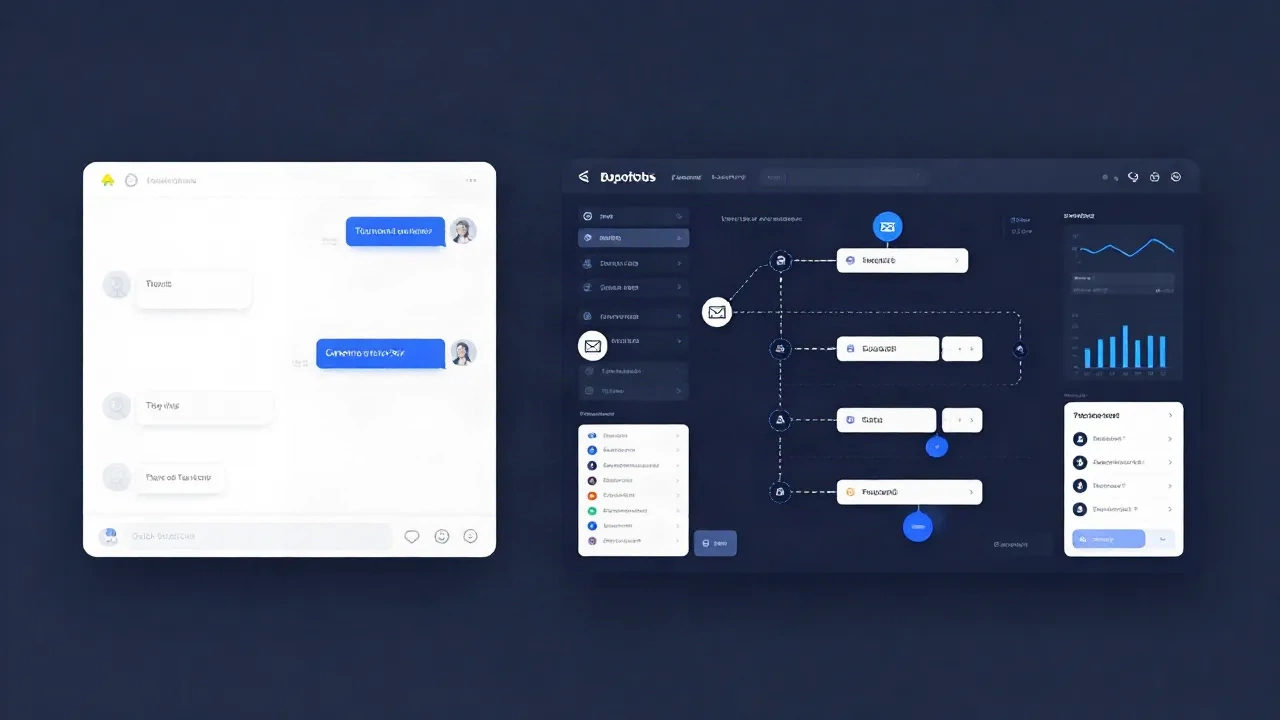
The ai agent vs chatbot distinction matters more than most founders realize. You paste a pitch into ChatGPT, tweak the output, send it manually, and call it an AI-powered workflow. That is a chatbot workflow. An AI agent does something fundamentally different: it executes multi-step tasks without you supervising each one. In PR terms, that is the difference between a writing assistant and something that actually runs your outreach. Here is what separates the two, with real data from press campaigns, not from a vendor pitch.
What a Chatbot Actually Does in Your PR Workflow
A chatbot is text-in, text-out. You give it a prompt, it gives you output. You use that output. Done.
In PR, the loop looks like this: you describe your startup, ask for a pitch draft, edit it, copy-paste it into Gmail, and hit send. The chatbot participated in one step. You did the other five.
That is still useful. A well-prompted chatbot pitch is measurably better than most of what hits a journalist inbox. Having read somewhere north of 10,000 pitches professionally, I can tell you the bar is genuinely low. Subject lines that do not name the news. Three-paragraph intros before a single data point. Pitches addressed to a reporter who left the publication eight months ago. A chatbot given the right context fixes the writing quality problem.
But writing quality is not the whole problem. Research, timing, targeting, follow-up sequencing: a chatbot does not touch any of those unless you do the work first and feed it the results. The trap founders fall into is treating a better-sounding pitch as a solved workflow. It is one improved step inside a five-step problem.
What an AI Agent Does That a Chatbot Cannot
An AI agent operates in a loop. It observes, reasons, acts, checks whether the task is complete, and repeats until it is. It has access to tools: search APIs, email clients, databases, calendars, and CRMs. It does not wait for your next prompt.
A practical PR agent workflow looks like this:
Pulls your journalist list from a connected source (your CRM, a Muck Rack export, a curated spreadsheet)
Checks which reporters have published on adjacent topics in the last 30 days
Personalizes each pitch based on their recent bylines and coverage patterns
Sends the emails via API connection to your inbox
Monitors for replies and flags no-response threads at 48 hours and 72 hours
Updates your tracking sheet automatically after each send and reply event
No human in the loop from step 2 through step 6. That is the actual difference. Not writing quality. Execution quality. A tool that helps you write versus a tool that does the work.
Gartner projects that 40% of enterprise applications will embed AI agents by the end of 2026, up from less than 5% in 2025. PR teams using agent-driven workflows report 67% time savings and 43% better media placement rates compared to manual processes. That second number is not about better pitch prose. It is about better targeting, better timing, and follow-ups that actually fire.

Three Outreach Tasks Where Agents Beat Chatbots on Real Metrics
There are three areas where the performance gap is measurable, not theoretical.
Journalist research at volume. Finding the right reporters for a specific pitch is the task that kills most founder PR attempts before the first email goes out. You spend two hours on 10 names. Eight no longer cover your vertical. One left the publication. One published something directly relevant to your angle this week, which you missed entirely. An agent handles 50 contacts in the time it takes you to vet the first five. Not because it reasons better, because it does not get bored or lose track.
Coverage trigger monitoring. When a major publication covers something adjacent to your category, you have a 24-48 hour window where journalists are actively seeking follow-up angles, data points, and counterarguments. Reactive pitching inside that window lands at roughly three to four times the reply rate of cold outreach. A chatbot misses that window unless you are already watching the news cycle. An agent running a monitoring loop surfaces the trigger and drafts a reactive pitch before you open your laptop.
Follow-up sequencing without the tracking overhead. From a base of 14,000 journalist contacts: average reply rate on a first pitch sits at 7-12%. A day-3 and day-7 follow-up sequence brings total reply rate to 18-23%. Most founders skip the follow-up because tracking who received which email and when is tedious enough to kill the discipline after two weeks. An agent handles that sequencing without a spreadsheet you have to maintain by hand.
One more thing nobody talks about: what happens when a journalist actually replies and wants a call. That conversation is where placements get won or lost, and you need everything on record.
Where Chatbots Still Win
Agents are not the right answer for every stage. Two situations where a chatbot outperforms.
First: when you are still testing your angle. An agent running a weak pitch at scale sends that weak pitch to 50 journalists simultaneously. That is worse than one bad pitch sent manually. You cannot automate your way past a story nobody wants to cover. Before you automate anything, you need a tested angle: one that has already generated replies at small scale, one where you know which publication and which beat you are targeting and why. Use a chatbot to iterate. Run small manual batches. Find what resonates. Then automate the version that works.
Second: voice consistency for high-touch outreach. If your pitch voice is specific, dry, and data-heavy, keeping it consistent across agent-generated personalization is harder than reviewing each chatbot output individually. For volume outreach to broad lists, agents win on efficiency. For 5-10 priority journalists who know your name and have replied before, a chatbot where you see and control each word is the better tool.
The pattern: chatbot to find the angle, agent to scale it.

Which PR Tools Have Crossed from Chatbot to Agent in 2026
Most AI PR tools in 2025 were chatbot wrappers with a cleaner interface. In 2026, the category has stratified into two distinct tiers.
Agility PR now has an agentic layer that converts a single prompt into a complete executive media report, pulling from live monitoring data across print, broadcast, online, and social channels. That is not a chatbot feature. It is a pipeline running without you.
Muck Rack has added workflow automation that triggers outreach actions based on journalist activity: when a reporter publishes something in a tracked category, an action fires. Setup still requires significant human configuration. Call it half-agent, with pricing to match (north of $500 per month for meaningful automation).
Connectively (formerly HARO) runs a query-matching loop that is agent-adjacent: it monitors incoming journalist queries, matches them against your expertise profile, and surfaces relevant ones. The response still happens manually. Reply rates on Connectively have dropped to 2-4% for generic submissions in 2026, according to data shared across multiple founder communities. The problem is not the missing agent layer. It is that the underlying signal has been polluted by too many chatbot-generated generic responses on both sides.
The lesson from Connectively: an agent-class tool is only as useful as the quality of data it acts on. Automate a broken signal and you get automated noise.
How to Choose Between Chatbot and Agent for Your Outreach Volume
Here is the decision framework that holds up across the campaigns I track.
Under 20 pitches per month: chatbot workflows are sufficient. The setup overhead of an agent pipeline does not pay back at that volume. Use a well-prompted LLM to draft pitches, keep a simple tracking spreadsheet, and calendar your follow-ups. That alone puts you ahead of the majority of what lands in a journalist inbox.
20-100 pitches per month, regular podcast booking, reactive pitching on news cycles: an agent workflow pays back within the first two campaigns. Journalist research, personalization at scale, follow-up tracking, and coverage monitoring compound into real hours recovered.
Over 100 pitches per month, multiple angles, multiple publications, ongoing media relationships: manual processes will collapse. Chatbot assistance does not provide the structure. Agent-class tools or a fractional PR person who uses them daily is the answer.
One number to anchor the decision: the average founder doing solo PR manually logs 6-9 hours per week on outreach tasks (research, writing, sending, tracking, following up). An agent workflow brings that to 2-3 hours. That is half a workday returned to product every single week.
Building pitch decks and press kits is part of that workload too. A solid AI workspace that handles visual assets, decks, and written materials in one place reduces the prep overhead before any pitch goes out.
What No Tool Fixes
Agents do not fix weak news. If your startup does not have a story a journalist wants to tell, no automation improves your placement rate. An agent sends your weak pitch faster. A chatbot helps you write a better-sounding weak pitch.
The actual constraint for most founders is not the tooling. It is the angle. Knowing what the news is inside your own company. Knowing which data point makes a reporter stop scrolling. Knowing the timing that makes this relevant in the current news cycle rather than whenever you felt ready to send.
That work happens in your head. The tools handle everything downstream.
Find the angle first. Then automate it. That order does not change regardless of how sophisticated the agent gets.